
AI in Indian Manufacturing: Boosting Efficiency and Cutting Costs
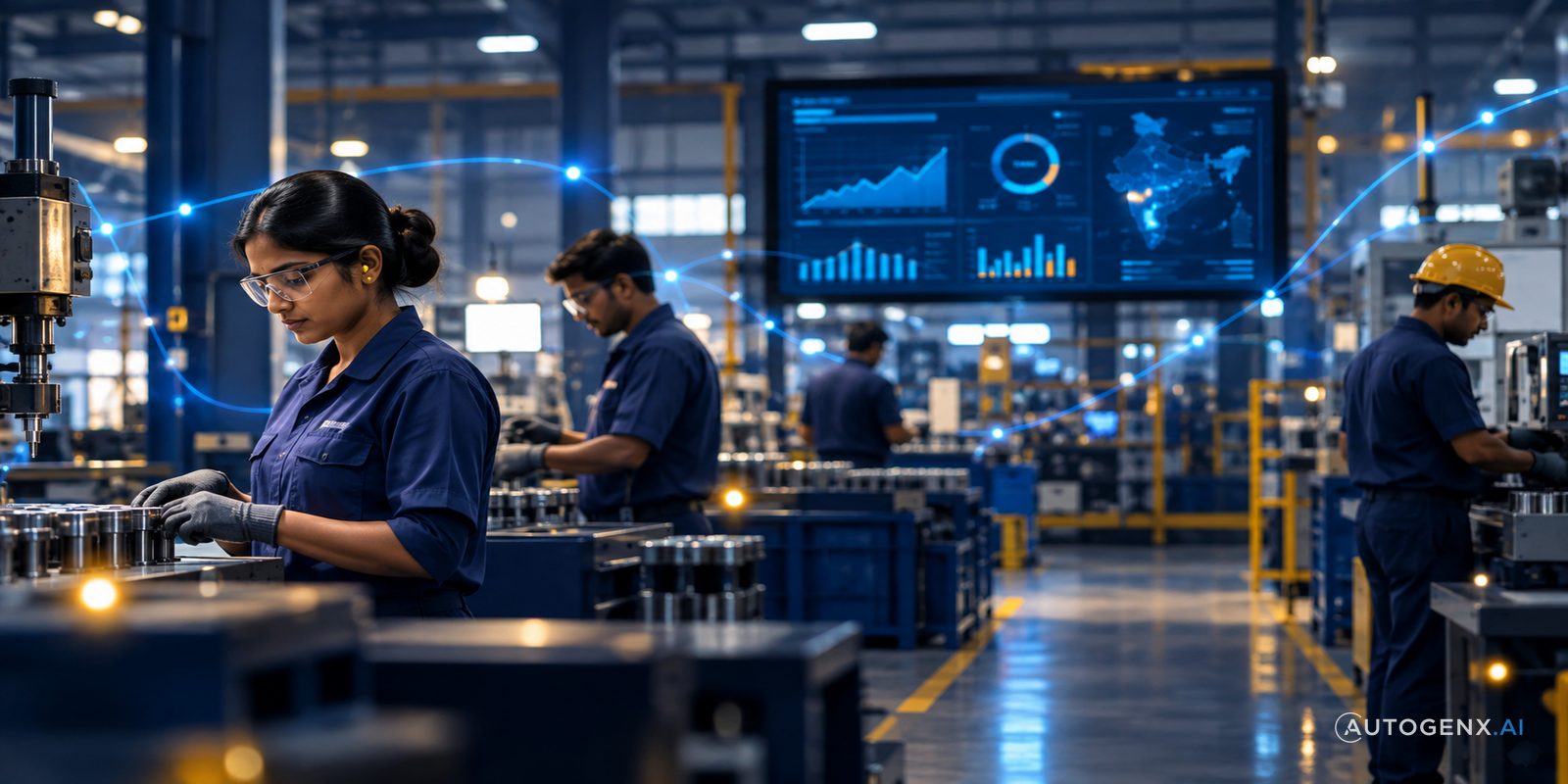
The Current Landscape of AI in Indian Manufacturing
AI adoption in Indian manufacturing has surged significantly, with a recent report indicating that about 45% of manufacturing companies in India have integrated AI solutions into their operations. This trend is expected to continue its upward trajectory, driven by the pressing need to boost operational efficiency and reduce costs. As Indian manufacturers face increasing global competition, AI is becoming an essential tool in optimizing production processes and maintaining competitive edges.
One of the key operational challenges that AI addresses in the manufacturing sector is efficiency. AI-driven automation systems enable manufacturers to streamline their processes, resulting in faster production cycles and reduced human error. For instance, predictive maintenance, powered by AI algorithms, can foresee equipment failures before they occur, thereby minimizing downtime and extending equipment lifespan. This not only ensures smooth operational workflows but also translates to substantial cost savings.
In terms of cost reduction, AI technologies such as machine learning and data analytics play a pivotal role. By analyzing large datasets, AI can uncover hidden patterns that inform smarter decision-making, inventory management, and demand forecasting. This data-driven approach helps manufacturers reduce waste, optimize resource allocation, and ultimately lower operational costs. According to industry experts, these AI-driven improvements can typically lead to cost reductions ranging from 10% to 20% across various sectors, although actual savings may differ based on specific regional and operational factors.
As AI continues to evolve, its role in addressing these operational challenges is expected to deepen, further solidifying its importance in the Indian manufacturing landscape. Such advancements promise not only to enhance productivity but also to foster innovation within the industry.
Operational Efficiency Through AI-Driven Automation
AI-driven automation is revolutionizing operational efficiency in Indian manufacturing, with significant advancements in predictive maintenance and quality control. Predictive maintenance, powered by AI algorithms, allows manufacturers to foresee equipment failures and schedule maintenance proactively. This approach significantly decreases downtime, which in traditional setups can lead to losses ranging from thousands to millions of USD annually, depending on the scale and nature of operations. A study by McKinsey highlighted that predictive maintenance can reduce machine downtime by 30% to 50%, leading to substantial cost savings and improved productivity.
In quality control, AI systems utilize machine learning to detect defects with high precision and consistency, which human inspection might miss. This not only ensures better product quality but also reduces waste and rework costs. According to a report by Deloitte, AI in quality control can improve defect detection rates by up to 90%, thereby enhancing overall production efficiency and competitiveness in the market.
These AI-driven solutions provide Indian manufacturers with a competitive edge by optimizing production processes and enabling faster, more reliable operations. As industries increasingly adopt AI technologies, the ability to maintain high operational efficiency will be pivotal in staying competitive globally. The impact of AI on productivity is evident as manufacturers who implement these technologies are better positioned to meet market demands and adapt to evolving industrial landscapes.
Cost Reduction Strategies Enabled by AI
The integration of AI technologies in Indian manufacturing has led to significant cost reductions by optimizing resource utilization and minimizing waste. Leading companies in India, such as Tata Steel and Mahindra & Mahindra, have reported considerable savings by employing AI-driven solutions to enhance their operational workflows.
One primary area where AI contributes to cost savings is through predictive maintenance. By analyzing data from sensors and IoT devices, AI systems can anticipate equipment failures before they occur, reducing downtime and maintenance costs. For instance, Tata Steel has implemented predictive maintenance across its facilities, resulting in a decrease in unscheduled downtimes, leading to substantial cost savings.
Additionally, AI enhances supply chain efficiencies by optimizing logistics and inventory management. Mahindra & Mahindra has adopted AI algorithms to streamline their supply chain processes, improving demand forecasting and reducing excess inventory. This optimization not only cuts storage costs but also ensures timely delivery of products, enhancing customer satisfaction.
AI technologies also enable manufacturers to refine their production processes by identifying inefficiencies and suggesting improvements. For example, AI can analyze production line data to recommend adjustments that reduce material waste and energy consumption. Companies like Maruti Suzuki have utilized these insights to optimize their manufacturing processes, resulting in lower operational costs and a reduced environmental footprint.
Overall, AI-driven strategies are reshaping the cost structures in Indian manufacturing, providing a competitive edge by enhancing resource allocation and supply chain efficiencies. As more companies adopt these technologies, the cumulative impact on cost savings and operational efficiency is expected to grow, driving the sector forward in the global market.
Navigating Compliance with AI
As Indian manufacturers face stringent requirements under the Digital Personal Data Protection (DPDP) Act 2023, AI technologies have become instrumental in ensuring compliance. These tools are essential for managing the enormous volumes of data that modern manufacturing environments generate. By automating data handling processes, AI can significantly reduce the risk of human error, which is often a major compliance concern.
AI-driven systems enhance data protection by employing advanced algorithms to monitor data flows and detect anomalies. This continuous surveillance aids in identifying potential data breaches or misuse quickly, thereby allowing manufacturers to respond proactively. Additionally, AI can automate the process of data classification and ensure that sensitive information is handled according to regulatory standards, which is crucial for compliance with the DPDP Act's provisions on data processing and storage.
The strategic advantage of integrating AI into compliance frameworks lies in its ability to streamline operations while maintaining strict adherence to legal requirements. For instance, AI can facilitate real-time reporting and auditing, ensuring that all transactions and data processes are consistently documented and easily retrievable during compliance audits. This not only simplifies regulatory reporting but also provides a comprehensive audit trail that can be invaluable during investigations.
In the broader regulatory landscape, AI supports manufacturers by providing predictive insights that can inform strategic decision-making. By analyzing trends and forecasting potential compliance challenges, AI helps businesses remain agile and prepared for future regulatory changes. Ultimately, the integration of AI into compliance processes not only protects businesses from legal repercussions but also positions them as forward-thinking leaders in the industry.
Future Prospects and Strategic Partnerships
The future of AI in Indian manufacturing is poised for significant growth, driven by advancements in technology and increasing adoption rates. As manufacturers seek to enhance productivity and stay competitive, AI offers transformative potential in areas such as predictive maintenance, supply chain optimization, and quality control. According to a report by NASSCOM, the adoption of AI in Indian manufacturing is expected to grow at a compound annual growth rate (CAGR) of 30% by 2025, underscoring the sector's readiness to embrace AI innovations.
Strategic partnerships play a crucial role in this evolution, enabling manufacturers to leverage specialized expertise and resources. Collaborations with technology providers, research institutions, and industry experts are essential for developing and deploying AI solutions that are tailored to specific operational needs and challenges. These partnerships facilitate access to cutting-edge technologies and foster innovation through shared knowledge and capabilities.
As manufacturers look to harness the full potential of AI, the integration of custom software solutions becomes increasingly important. Tailored AI applications can address unique business requirements, ensuring that AI initiatives align with strategic objectives and deliver measurable benefits. This approach not only maximizes efficiency but also enhances decision-making processes by providing actionable insights.
AutoGenX.AI stands ready to assist Indian manufacturers in navigating this transformative journey. With expertise in consulting and custom software development, we offer comprehensive solutions that help organizations integrate AI seamlessly into their operations. Our focus on bespoke AI implementations ensures that each client receives a solution that is perfectly aligned with their strategic goals and operational challenges. For more on our approach, visit our solutions page.
See what we'd build for you
Book a short consult and we'll map one workflow your AI can own, end to end.
Book a consultFrequently asked questions
What are the latest trends in AI adoption in Indian manufacturing?
AI adoption in Indian manufacturing is rapidly increasing, with significant investments in automation and data analytics to enhance operational efficiency and reduce costs. Recent statistics indicate substantial growth in AI-driven solutions across the sector.
How does AI improve operational efficiency in manufacturing?
AI improves operational efficiency by automating processes such as predictive maintenance and quality control, which reduces downtime and enhances accuracy. These technologies streamline operations and result in significant productivity gains.
How can AI help with compliance in the manufacturing sector?
AI helps with compliance by automating data protection processes and ensuring adherence to regulations like the DPDP Act 2023. It enhances data security, streamlines consent management, and reduces the administrative burden of compliance.
What role does AutoGenX.AI play in the AI manufacturing landscape?
AutoGenX.AI provides consulting and custom software development to help manufacturers integrate AI technologies effectively. Their expertise ensures seamless implementation, maximizing the benefits of AI in enhancing operational efficiency and compliance.