
Navigating AI in Mid-Market Logistics: Overcoming Talent Constraints
The Growing Demand for AI Skills in Logistics
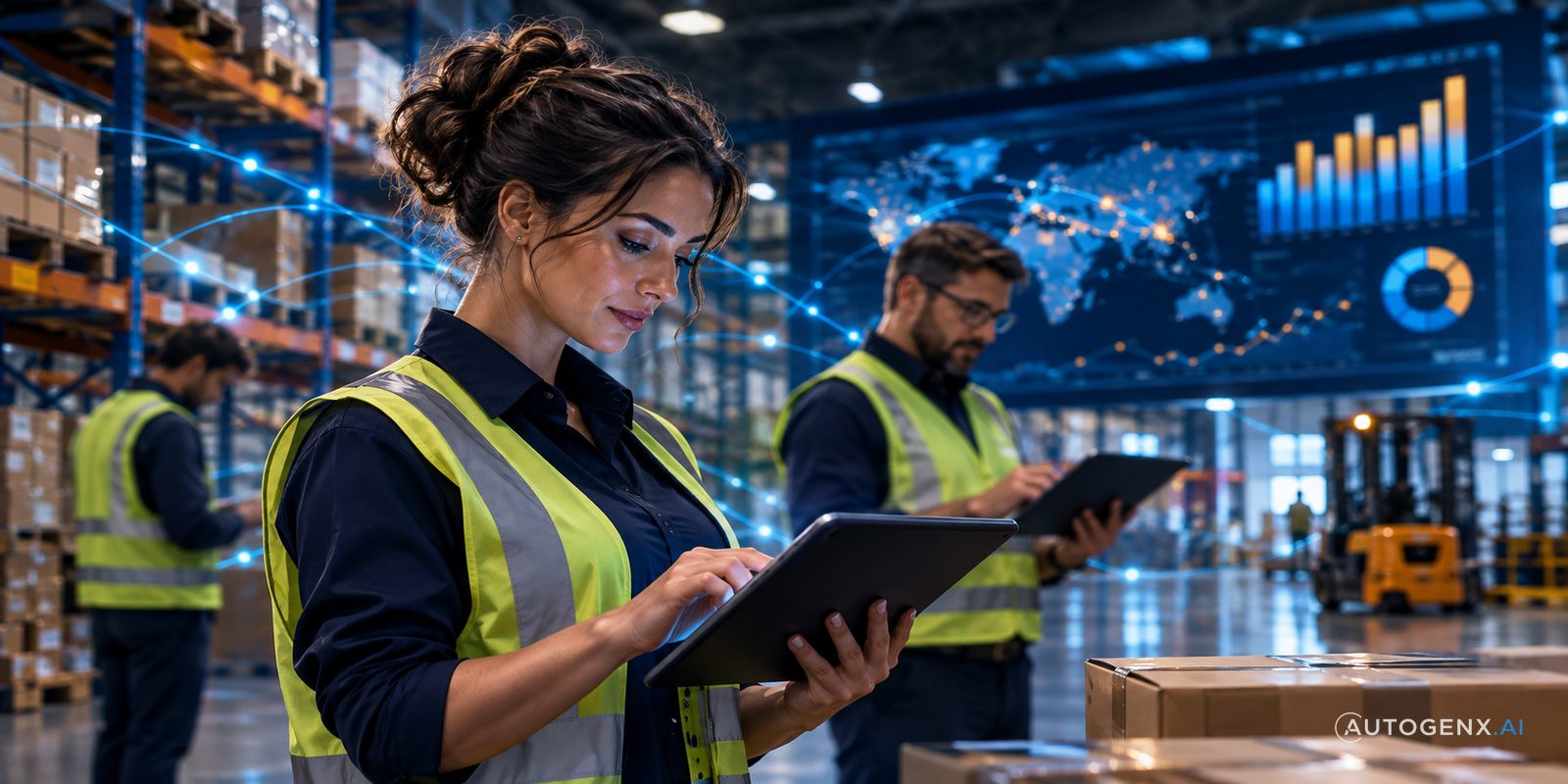
The demand for AI skills in logistics is surging, with a projected 387% increase in supply-chain roles requiring AI expertise from 2023 to 2026. This rapid growth underscores a significant talent constraint for mid-market logistics companies, who are now under pressure to integrate AI capabilities into their operations effectively. As the logistics industry increasingly relies on AI to optimize routes, manage inventory, and enhance customer service, the need for skilled professionals who can develop and manage these systems becomes crucial.
Mid-market logistics firms face unique challenges in this environment. Unlike larger corporations, they may lack the resources to attract and retain top-tier AI talent. This creates a competitive disadvantage, as AI-driven efficiencies become a standard expectation. Companies without access to skilled AI professionals may struggle with implementing advanced technologies, potentially leading to inefficiencies and increased operational costs.
Moreover, the complexity of AI systems requires a workforce that is not only technically proficient but also able to integrate AI solutions seamlessly into existing processes. As AI technology evolves, continuous learning and adaptation become essential, further intensifying the demand for skilled professionals. This talent gap could hinder the ability of mid-market logistics companies to leverage AI fully, impacting their competitiveness and growth potential.
To address these challenges, companies may need to invest in upskilling current employees, collaborate with educational institutions to cultivate future talent, or explore strategic partnerships that provide access to AI expertise. Navigating these constraints effectively is critical for mid-market logistics companies aiming to harness the full potential of AI technologies in their operations.
Challenges Faced by Mid-Market Logistics Companies
Mid-market logistics companies face several unique challenges in adopting AI compared to their larger counterparts. A primary hurdle is the limited resources available to attract and retain AI talent. According to a report by McKinsey, the salaries for AI specialists in the US can range from $100,000 to over $300,000 USD annually, depending on expertise and location. This high cost makes it difficult for mid-sized firms to compete with tech giants who have deeper pockets and can offer more lucrative compensation packages.
Additionally, mid-market firms often lack the infrastructure and technical expertise needed for seamless AI integration. While large enterprises may have dedicated teams to handle AI implementation and maintenance, mid-market companies frequently rely on smaller IT teams that are already stretched thin with existing responsibilities. This can lead to inefficiencies and delays in AI deployment, further widening the gap between them and larger competitors.
Another challenge is the competitive disadvantage against tech giants that not only have more financial leverage but also possess vast data resources. AI systems thrive on large datasets to improve accuracy and effectiveness, and these giants have the advantage of access to massive amounts of data. In contrast, mid-market companies may struggle with limited data, making it difficult to train AI systems effectively.
To overcome these challenges, mid-sized logistics companies need to explore innovative strategies to bridge the talent and resource gap, such as forming strategic alliances or leveraging external expertise. By doing so, they can better position themselves to compete in an increasingly AI-driven marketplace.
Strategic Approaches to Bridging the Talent Gap
Mid-market logistics companies often face significant challenges in acquiring the necessary talent to implement AI technologies effectively. One strategic solution is forming partnerships with external service providers. By collaborating with AI consulting firms or managed service providers, mid-market companies can access a pool of skilled professionals who bring expertise and experience that may be lacking internally. These partnerships can offer tailored solutions that align with specific business objectives, enabling companies to leverage AI without the need for extensive in-house capabilities.
Investing in employee training programs is another crucial approach to bridging the talent gap. By upskilling existing staff, companies can cultivate internal AI expertise, which helps in sustaining long-term innovation and capability growth. Training programs can range from online courses to in-depth workshops, focusing on practical skills in data analysis, machine learning, and AI deployment. Research shows that companies investing in workforce development typically see enhanced employee productivity and satisfaction, which can lead to more successful AI implementation.
Both strategies—external partnerships and internal training—provide significant benefits. They enable mid-market logistics firms to remain competitive by quickly adopting AI technologies while managing costs effectively. External partnerships can reduce the time to implementation by leveraging the expertise of seasoned professionals, while internal training can build a culture of innovation and adaptability within the organization. Together, these approaches not only address immediate talent constraints but also pave the way for sustainable growth and improved operational efficiency.
The Benefits of Targeted AI Applications
Targeted AI applications in logistics offer significant advantages over comprehensive system overhauls, particularly for mid-market companies facing resource constraints. By focusing on specific problem areas, such as exception management and routing optimization, companies can achieve operational improvements without the extensive time and financial investment required for a complete redesign.
Exception management is a critical area where targeted AI can bring immediate benefits. Logistics operations frequently encounter disruptions, from weather-related delays to supplier issues. AI-driven tools can swiftly identify these exceptions and suggest optimal resolutions, minimizing downtime and maintaining service levels. For instance, machine learning algorithms can analyze historical data to predict potential disruptions and recommend preventative actions, ensuring smoother operations.
Routing optimization is another area ripe for targeted AI solutions. By leveraging AI, logistics companies can enhance route planning efficiency, reducing fuel costs and delivery times. AI systems can process vast amounts of data, including traffic patterns and delivery windows, to generate the most efficient routes. This not only cuts operational costs but also improves customer satisfaction by ensuring timely deliveries.
These targeted applications allow mid-market logistics firms to experience quicker returns on their AI investments. As per industry sources, implementing such solutions can cost anywhere from $50,000 to $150,000 USD, depending on the scope and complexity. These figures are general market ranges and can vary significantly by region, underscoring the importance of a tailored approach to AI adoption. By strategically applying AI to specific challenges, companies can enhance their competitive edge without the burden of a full-scale transformation.
Leveraging Partnerships for AI Success
Strategic partnerships play a pivotal role in the successful adoption of AI technologies within mid-market logistics. By collaborating with external experts, logistics companies can access specialized knowledge and resources that might be otherwise unavailable internally. These partnerships allow businesses to leverage advanced AI capabilities without the need to build extensive in-house teams. For instance, third-party logistics providers have demonstrated significant success by integrating AI solutions to enhance operational efficiency and boost profitability. A study by McKinsey highlights that logistics companies adopting AI can achieve cost reductions of approximately 10-15% in their operations, illustrating the tangible benefits of informed partnerships.
Beyond cost savings, strategic partnerships provide mid-market logistics firms with the agility to adapt quickly to emerging trends and technologies. This adaptability is crucial in an industry where rapid changes in consumer demands and supply chain dynamics are common. By tapping into the expertise of seasoned technology providers, companies can ensure their AI implementations are both innovative and sustainable. These collaborations often cover a comprehensive range of services, from consulting and strategic planning to implementation and ongoing support, thereby reducing the risk associated with AI adoption.
At AutoGenX.AI, we understand the importance of robust partnerships in navigating the complexities of AI integration. Our approach combines consulting and custom software development to help logistics companies manage AI solutions strategically and effectively, ensuring long-term success. For a deeper understanding of how we can assist, explore our offerings on our solutions page.
See what we'd build for you
Book a short consult and we'll map one workflow your AI can own, end to end.
Book a consultFrequently asked questions
Why is there a talent shortage in AI for logistics?
The rapid advancement of AI technology and its integration into logistics has significantly increased the demand for skilled professionals, leading to a talent shortage. Mid-market companies struggle to compete with larger firms for top talent.
How can mid-market logistics companies attract AI talent?
Mid-market logistics companies can attract AI talent by offering competitive compensation packages, investing in employee development programs, and forming strategic partnerships with AI service providers.
What are some targeted AI applications in logistics?
Targeted AI applications in logistics include exception management, estimated time of arrival predictions, invoice verification, and routing optimization. These applications provide immediate operational improvements without extensive overhauls.
How can strategic partnerships benefit AI adoption in logistics?
Strategic partnerships allow logistics companies to access specialized AI expertise and resources, facilitating effective AI solution implementation and management. This approach helps bridge the talent gap and enhances operational efficiency.