
How Mid-Sized Manufacturers Are Quietly Winning the AI Race
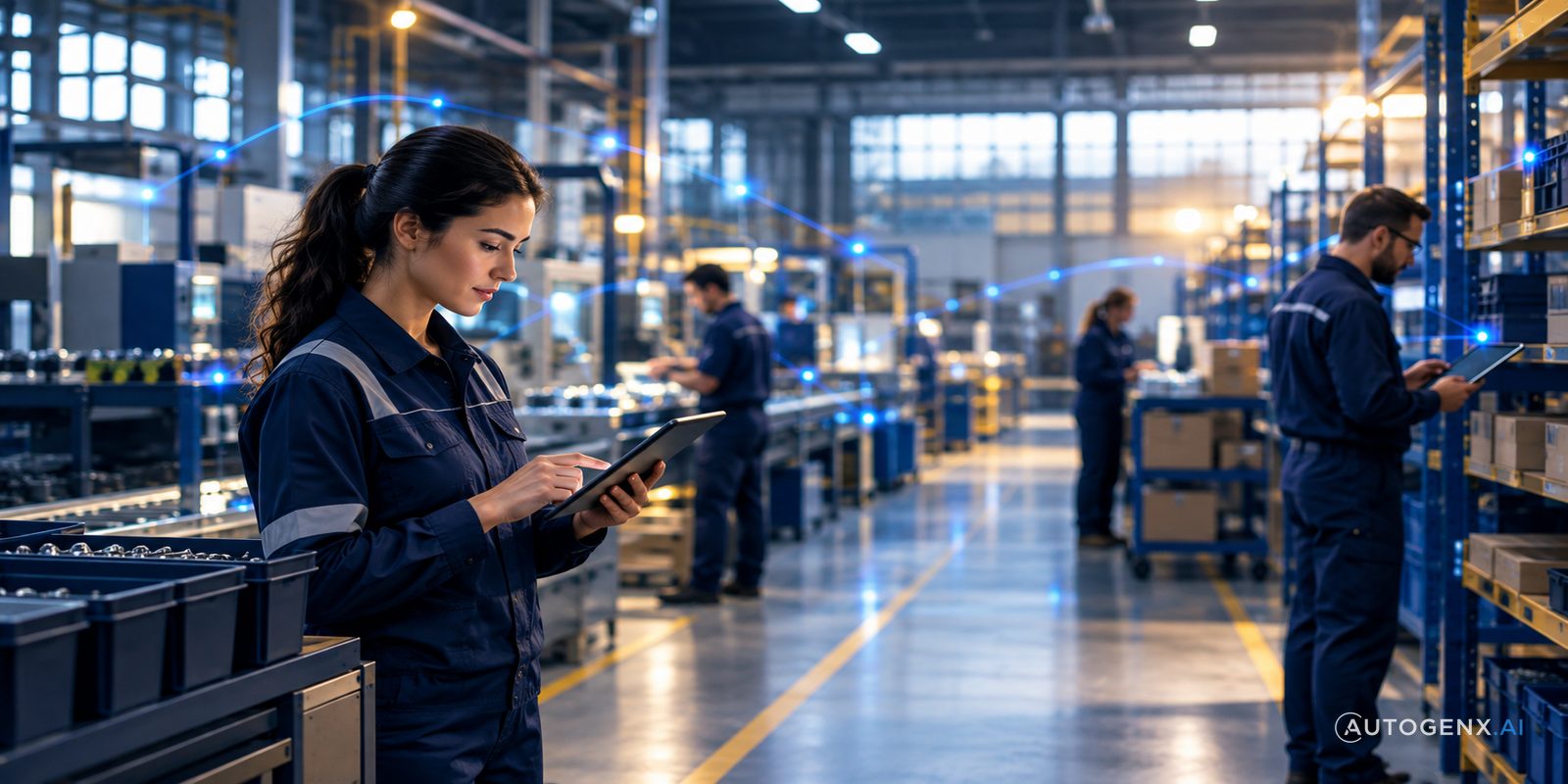
The AI Advantage for Mid-Sized Manufacturers
Mid-sized manufacturers are capitalizing on AI technology to seamlessly integrate essential supply chain functions such as inventory management, production planning, quality control, and job costing, without the cumbersome governance processes that often delay larger enterprises. By 2026, AI is expected to shift from analysis to orchestration, enabling these manufacturers to quickly adapt to market changes and demands. This agility allows them to implement AI-driven solutions in a fraction of the time it takes for larger companies burdened by extensive governance requirements.
In industries like food and beverage, chemicals, health and beauty, and industrial goods, there is a documented increase in demand for connected supply-chain technologies. These sectors benefit significantly from AI's capability to provide real-time insights and predictive analytics, which streamline operations and optimize resource allocation. For example, AI can predict inventory needs based on current trends, reducing both excess stock and shortages, which is crucial for maintaining competitive advantage and meeting consumer expectations.
The absence of extensive governance theatre, which typically involves lengthy decision-making and approval processes, enables mid-sized manufacturers to implement AI solutions more swiftly. This not only accelerates their operational efficiency but also enhances their ability to innovate and respond to industry shifts. As a result, these manufacturers are not just participating in the AI race; they are leading it by leveraging their nimbleness to outperform larger competitors constrained by slower processes.
Industry-Specific Demand for Connected Supply-Chain Tech
In the race to leverage artificial intelligence, mid-sized manufacturers in industries such as food & beverage, chemicals, health & beauty, and industrial manufacturing are experiencing a surge in demand for connected supply-chain technology. This demand is driven by a strategic need to transition from mere data analysis to comprehensive orchestration by 2026. These industries are recognizing the value of AI not just for insights but for orchestrating complex supply chain processes, enabling more agile and responsive operations.
Food and beverage manufacturers, for instance, are increasingly using AI to manage perishable inventory, optimize shelf life, and forecast demand with greater accuracy. This sector requires a highly responsive supply chain to adapt to changing consumer preferences and regulatory standards. Similarly, the chemicals industry is harnessing AI to improve inventory management and production planning, ensuring that raw materials are available when needed without overstocking.
The health & beauty sector, characterized by rapidly changing trends and consumer demands, benefits from AI-enabled supply chains that enhance product development cycles and improve distribution efficiency. Meanwhile, industrial manufacturers are leveraging AI to streamline production processes and reduce downtime through predictive maintenance and real-time resource allocation.
These mid-sized manufacturers are uniquely positioned to benefit from AI integration due to their ability to implement changes more swiftly than larger enterprises, which often face prolonged governance processes. By adopting connected supply-chain technologies, these companies are setting themselves up for a competitive edge, transitioning smoothly from data analysis to full-scale orchestration. The shift not only enhances operational efficiency but also positions these manufacturers to navigate and thrive in a rapidly evolving market landscape.
Overcoming Governance Challenges
While larger enterprises may boast greater resources for AI integration, mid-sized manufacturers often gain an edge through their nimbleness, particularly in governance. The scale of larger companies often necessitates extensive governance processes that can delay AI implementation by 18 months or more. In contrast, mid-sized manufacturers can streamline decision-making and reduce bureaucratic layers, expediting the deployment and adaptation of AI technologies.
This agility is particularly advantageous as AI evolves from analytical tools to orchestration systems that integrate deeply with business processes. Smaller manufacturers in sectors such as food & beverage, chemicals, health & beauty, and industrial manufacturing are already leveraging this flexibility to implement connected supply-chain technologies more rapidly. By avoiding the "governance theatre" common in larger organizations, these companies can swiftly adapt to evolving AI capabilities, aligning closely with operational needs and market demands.
Furthermore, mid-sized manufacturers often maintain closer relationships between decision-makers and operational teams, facilitating faster feedback loops and more responsive adjustments to AI systems. This close-knit structure allows for quicker iteration and optimization, ensuring that AI solutions remain effective and relevant as business requirements evolve. As AI continues to shift toward orchestration, this ability to rapidly adapt and refine systems without the encumbrance of lengthy governance processes provides a significant competitive advantage.
Ultimately, the smaller scale of mid-sized manufacturers not only allows for faster AI integration but also fosters a culture of continuous improvement and innovation, enabling these companies to stay ahead in the AI race despite having fewer resources than their larger counterparts.
Market Trends and Competitive Edge
In recent years, market trends have increasingly favored mid-sized manufacturers, particularly as industries shift towards more agile and responsive supply chains. This transformation is largely driven by the need for enhanced flexibility and speed in response to rapidly changing consumer demands and global disruptions. Mid-sized manufacturers, with their nimble organizational structures, are uniquely positioned to capitalize on these trends and leverage AI technologies more effectively than their larger counterparts.
The competitive edge enjoyed by mid-sized manufacturers lies in their ability to implement AI-driven solutions with fewer bureaucratic hurdles. While large enterprises often face long decision-making cycles and complex governance structures, mid-sized companies can pivot more quickly, integrating new technologies like AI into their operations with greater speed and efficiency. This advantage allows them to connect critical components of their supply chains, such as inventory management, production planning, and quality control, in a cohesive and streamlined manner.
Industry-specific demand for connected supply-chain technologies is on the rise in sectors such as food and beverage, chemicals, health and beauty, and industrial manufacturing. As AI shifts from merely analyzing data to orchestrating complex processes by 2026, mid-sized manufacturers are well-positioned to harness these capabilities to enhance operational efficiency and reduce costs. By adopting AI innovations, they can achieve a more synchronized supply chain, leading to improved product quality, reduced waste, and better alignment with market needs.
This trend towards agility and responsiveness not only enhances competitiveness but also creates opportunities for mid-sized manufacturers to carve out significant market share from larger competitors, who may struggle with the inertia of their own scale. As AI continues to evolve, these manufacturers stand to gain even more from their ability to rapidly adapt and innovate.
The Role of Custom Builds and Managed IT in AI Integration
Mid-sized manufacturers are uniquely positioned to leverage AI technologies through custom builds and managed IT services. These services provide tailored solutions that align precisely with a company's operational needs, enabling seamless integration of AI into existing systems. Unlike rigid, one-size-fits-all enterprise solutions, custom builds offer flexibility, allowing manufacturers to address specific challenges such as inventory management, production planning, and quality control.
Managed IT services further enhance AI integration by providing ongoing support and maintenance, ensuring that systems remain up-to-date and capable of adapting to new demands. This model allows mid-sized manufacturers to benefit from cutting-edge technology without the overhead of maintaining an extensive in-house IT team. Managed services can handle everything from routine updates to complex troubleshooting, offering a cost-effective way to ensure optimal system performance.
In practice, the combination of custom builds and managed IT services facilitates a smoother transition from traditional operations to AI-driven processes. This approach minimizes downtime and maximizes the return on investment by ensuring that new technologies are implemented effectively and efficiently. For example, in the food and beverage sector, custom AI solutions can optimize supply chain operations, improving both speed and accuracy of deliveries.
As AI continues to evolve from analytical tools to orchestration platforms, mid-sized manufacturers that embrace these tailored solutions will likely maintain a competitive edge. AutoGenX.AI assists in this journey by offering comprehensive consulting, custom development, and managed IT services, helping manufacturers seamlessly integrate AI into their operations without the lengthy governance processes typically seen in larger enterprises.
See what we'd build for you
Book a short consult and we'll map one workflow your AI can own, end to end.
Book a consultFrequently asked questions
Why are mid-sized manufacturers adopting AI faster than larger enterprises?
Mid-sized manufacturers can adopt AI faster because they have less bureaucratic governance, allowing for quicker decision-making and integration of new technologies.
Which industries are seeing the most demand for AI in mid-sized manufacturing?
Industries such as food & beverage, chemicals, health & beauty, and industrial manufacturing are seeing significant demand for AI to enhance supply chain operations.
How does AI help in supply chain management for mid-sized manufacturers?
AI helps mid-sized manufacturers by connecting various supply chain functions, allowing for real-time data analysis and more efficient production planning, inventory management, and quality control.
What role does AutoGenX.AI play in AI integration for manufacturers?
AutoGenX.AI offers consulting, custom software development, and managed IT support to help manufacturers implement and run AI solutions tailored to their specific needs.